By Justin Davis, Drone Camps RC · October 6, 2026
The numbers coming out of the southern border are startling enough to stop any drone pilot mid-scroll. In the 30 days before early October 2026, the U.S. military detected 378 drone incursions along the border — and the trend is climbing. That figure, disclosed by Brig. Gen. Brian Filler of Joint Task Force Southern Border, was the backdrop for Falcon Peak, a U.S. Northern Command counter-drone exercise held in September at the Yuma Proving Grounds in Arizona and publicized on October 5.
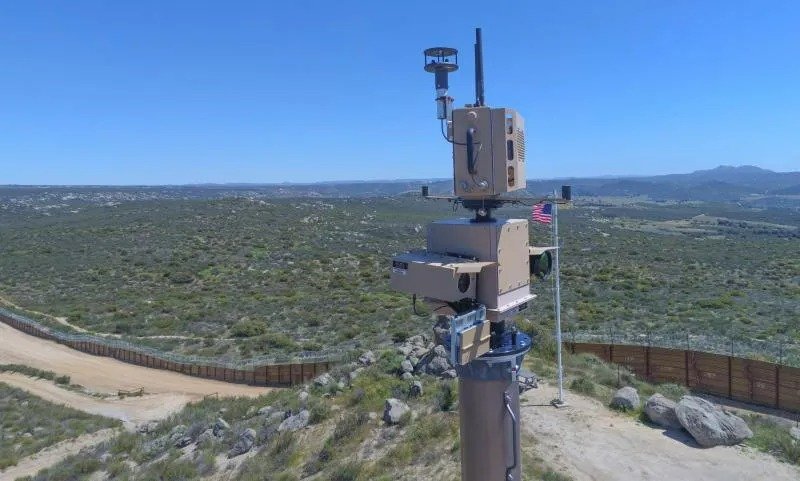
Falcon Peak put defense contractors through their paces in the desert, demonstrating the full menu of modern counter-drone technology: long-range radars tuned to pick out small, slow, low-flying targets; interceptor drones designed to chase and kill other drones mid-air; and autonomous gun systems that can track and engage unmanned aircraft without a human pulling the trigger. It was, in effect, a trade show where the products shoot back.
To put General Filler's number in perspective: 378 detections in a month works out to more than twelve a day, every day, along the border region his task force watches. And "detected" is doing heavy lifting in that sentence — it counts only the drones the military's sensors actually picked up. The real number of crossings is almost certainly higher, since small consumer drones flying low through desert terrain are genuinely hard to spot, even with purpose-built radar.
The trend line matters more than any single month. Military officials describe the incursion rate as climbing steadily, which tracks with everything else we know about the consumer drone market: aircraft keep getting cheaper, easier to fly, and more capable, which makes them more attractive to everyone — including the cartels. According to the military, the vast majority of these border drones are commercial off-the-shelf models carrying cameras, flown by cartel spotters conducting surveillance on smuggling routes: watching for Border Patrol movements, scouting crossing points, and monitoring law enforcement patterns from the one domain where they cannot easily be chased.
Falcon Peak's demonstrations read like a catalog of where counter-drone technology stands in 2026. Ground-based radars have gotten dramatically better at the hardest detection problem in the business — distinguishing a small plastic quadcopter from birds, ground clutter, and background noise at tactically useful ranges. Interceptor drones, essentially purpose-built hunter aircraft, can be launched to physically ram or net a hostile drone. And autonomous gun systems pair optical tracking with rapid-fire weapons for a last-ditch kinetic option.
The most eye-catching claim to emerge from the border deployment: since the military positioned this technology along the border in August, it has downed 11 cartel drones with lasers. Directed-energy weapons, long the stuff of defense-contractor slide decks, are now racking up a real operational scorecard. Eleven kills in roughly two months suggests the systems are past the experimental stage and into genuine utility — at least against the slow, low-flying commercial drones the cartels favor.
It is worth dwelling on what the cartels are actually doing with these aircraft, because it explains why the military response has escalated so quickly. These are not attack drones. They are flying cameras — the same class of consumer aircraft hobbyists fly on weekends, repurposed as an intelligence, surveillance, and reconnaissance network for smuggling operations. A $1,500 drone with a decent camera can watch a Border Patrol station's parking lot for hours, counting vehicles coming and going, or hover over a remote stretch of desert to confirm no agents are nearby before a crossing attempt.
That mission profile is maddeningly difficult to counter with traditional means. The drones are cheap enough to be expendable, quiet enough to go unnoticed at altitude, and flown from the Mexican side of the border where U.S. law enforcement cannot easily reach the operators. Every layer of the problem — detection, identification, and engagement — has to happen fast, at standoff distances, against targets that cost less than the interceptor sent to kill them. It is the same cost-exchange math driving counter-drone thinking everywhere from Ukraine to the Red Sea, now playing out over Arizona and Texas.
Here is the part that matters for everyone reading this site: the counter-drone boom is no longer an abstract defense story happening overseas. It is a domestic border-security story with hard numbers, congressional attention, and real deployments — and every capability demonstrated at Falcon Peak eventually shapes the regulatory environment the rest of us fly in. When policymakers talk about "military-grade" drones and the authorities needed to defeat them, the definitions they write do not always distinguish cleanly between a cartel spotter drone and the aircraft in your flight bag.
The 378-incursion figure will be quoted in hearings. The 11 laser kills will be quoted in budget requests. And the broader narrative — that small drones are a genuine security challenge requiring a national response — becomes the backdrop for every future conversation about Remote ID enforcement, counter-UAS authorities for state and local police, and what kinds of drone operations the public will tolerate. Hobbyists did not create the cartel drone problem, but we fly in the airspace where its consequences land. Understanding Falcon Peak is understanding the weather system heading our way.
Expect the border counter-drone footprint to keep growing. An upward-trending incursion rate plus demonstrated laser kills is exactly the combination that unlocks more funding, more sensors, and more permanent installations. The open questions are the interesting ones: how the military handles the legal thicket of engaging aircraft over U.S. soil, whether detection data gets shared with the FAA in ways that affect civilian airspace management, and how far counter-UAS authority expands beyond the border states.
For now, Falcon Peak stands as a milestone: the moment America's counter-drone enterprise came home in a serious way, with desert-tested hardware, a real adversary, and a scoreboard. The drone world — all of it, from FPV freestyle to border security — keeps getting more intertwined. Pilots who understand both sides of that story will navigate what comes next far better than those who only watch one.