By Justin Davis, Drone Camps RC · October 6, 2026
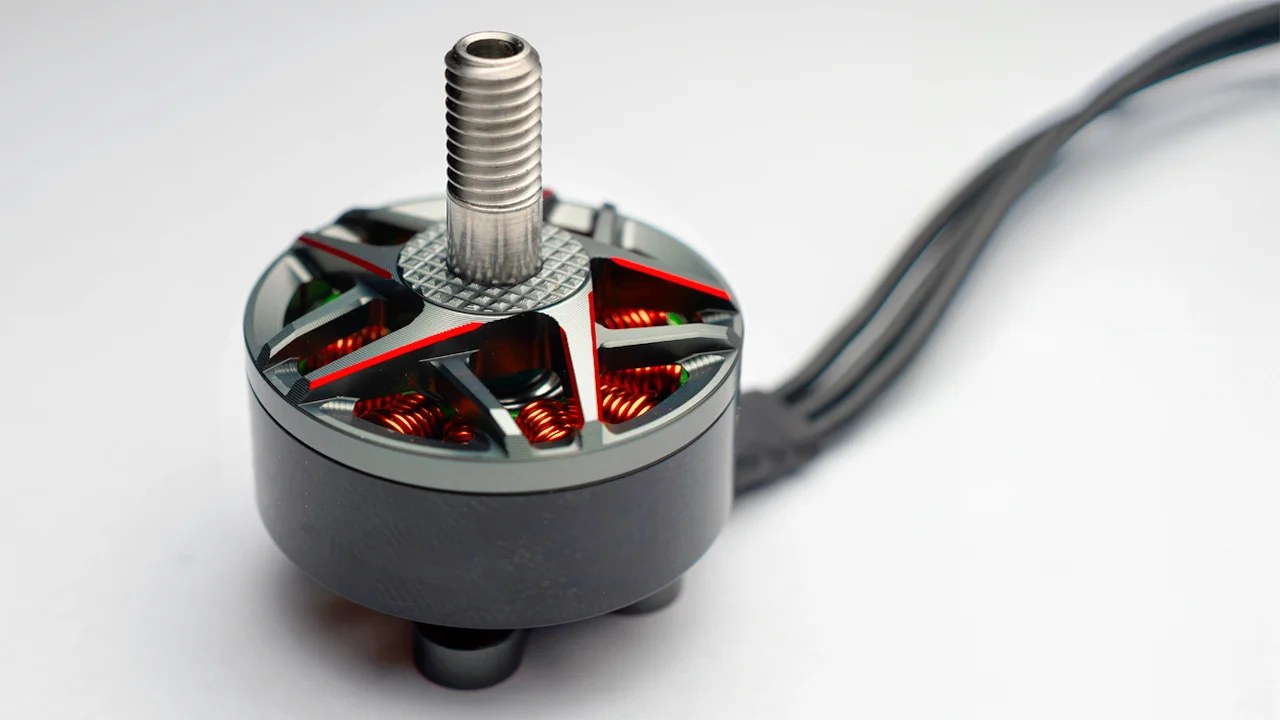
Ask a whoop pilot what single upgrade made the biggest difference to their quad, and more often than not the answer is motors. Props, batteries, and tunes all matter, but the motors define the ceiling of what the aircraft can do — how hard it punches out of a dive, how crisply it stops, how confidently it carries an HD camera. That is why BetaFPV's new 2026-generation 0802 motors deserve a close look: they are aimed squarely at the 75mm whoop platform that dominates indoor and backyard FPV.
The headline variant is the racing version, rated at a scorching 25000KV. But the full spec sheet tells a more complete story about what BetaFPV was trying to achieve — and whether these are worth swapping into your current build.
Let us start with the raw figures, because motor shopping lives and dies on them. The 2026 0802 is rated for 31.15 watts of maximum power and 8.15 amps of maximum current, all in a package weighing just 1.88 grams. That power-to-weight ratio is the entire point of the 0802 size class: enough muscle to hurl a 75mm whoop around aggressively, light enough not to burden the flight controller's tune.
The 1.88-gram weight deserves emphasis. On a whoop that might weigh 20 grams all-up without a battery, four motors account for roughly a third of the dry weight. Shaving fractions of a gram per motor — while increasing power — is exactly the kind of progress that shows up in flight as better hang time and snappier response.
BetaFPV sells them in 4-packs for around 47.90 euros, which puts a full motor swap at a reasonable price for the performance gain on offer. Motors are consumables in this hobby anyway; most aggressive pilots replace them as bearings wear or bells bend. Timing a scheduled replacement with a generational upgrade is just good sense.
The racing version's 25000KV rating will raise eyebrows, so it is worth unpacking. KV measures how fast a motor spins per volt with no load — higher KV means higher RPM on the same battery. On a 1S whoop, 25000KV translates to extremely fast-spinning motors and explosive throttle response.
But KV is not a "bigger number is always better" spec. Higher KV motors draw more current, generate more heat, and can feel twitchy if the tune is not dialed in. They shine for racing and aggressive freestyle where instant punch matters most. Pilots who prefer smooth cinematic flying or maximum flight time may actually prefer a lower-KV option in the same motor family.
The promise in the name — "instant throttle response" — comes from the combination of high KV and the motor's low rotating mass. Less mass to spin up means the motor reaches target RPM faster when you move the stick. In practice, that shows up as a quad that feels directly connected to your thumbs, with no lag between input and reaction.
Beyond the headline specs, the construction details suggest BetaFPV designed these for real-world abuse. Brass bushings replace the cheaper alternatives found on budget motors, promising smoother long-term operation as the motors accumulate flight hours. The 1mm shaft is the standard for the 0802 class, keeping propeller compatibility broad.
The electrical connections use a JST1.25 3-pin connector with 30AWG silicone wires cut to 35mm. Plug-style connectors have become the norm on whoops because they make motor swaps a five-minute job instead of a soldering session — a meaningful quality-of-life improvement for pilots who maintain their own fleets. The 30AWG wire gauge is appropriately sized for the current these motors draw; going thinner would risk voltage sag under load.
BetaFPV explicitly designed the 2026 0802 around its Meteor and Air 75mm whoop platform, and the same motors ship stock in the new Meteor65 Pro II O4 and Meteor75 Pro II O4. That is a strong signal: when a manufacturer puts its newest motors in its flagship bind-and-fly quads, it is betting the product line's reputation on them.
For owners of older BetaFPV 75mm quads, that compatibility is convenient. The motors drop into the same mounting pattern and work with the same propellers, so upgrading is a mechanical swap rather than a rebuild. For pilots flying other brands' 75mm whoops, the standard 0802 mounting and 1mm shaft mean cross-compatibility is likely, though checking your specific frame's mounting holes is always wise.
The honest answer depends on what you fly and how. If your current motors are worn — rough bearings, bent bells, declining performance — replacing them with the 2026 generation is an easy call. You are spending the money anyway; spend it on the newest hardware.
If your motors are healthy, the upgrade case rests on how much you value throttle response. Racers and aggressive freestyle pilots will feel the difference immediately. Casual cruisers may find the gains subtle relative to the cost and effort. Either way, the 2026 0802 sets a new baseline for what a whoop motor should deliver: over 31 watts from under 2 grams, with build quality meant to survive the learning curve.
Motor generations used to turn over slowly; now they arrive yearly, each one squeezing a little more performance from the same tiny package. The 2026 0802 is BetaFPV's latest answer to the eternal whoop question — how much punch can you fit in 8 millimeters — and on paper, the answer is: more than ever before.