By Justin Davis, Drone Camps RC · October 6, 2026
Read that headline again, because it would have been unthinkable a decade ago. According to IDC market figures reported around October 1, DJI and Insta360 — two companies the traditional camera industry barely noticed ten years ago — now dominate the portable and handheld camera market in unit sales, ahead of Canon, Sony, and Nikon. The Japanese giants that defined photography for half a century are losing the segment where the growth is, to companies that started out making drones and 360 cameras.
This is not a story about mirrorless flagships or professional cinema cameras, where Canon, Sony, and Nikon still rule. It is about the cameras people actually buy in volume: pocketable, stabilized, always-with-you devices for vlogging, travel, action sports, and everyday life. In that segment, the center of gravity has moved decisively to Shenzhen — and it is not moving back.
The traditional camera makers saw this segment coming and mostly walked away from it. As smartphones devoured the compact camera market in the 2010s, Canon, Sony, and Nikon retreated upmarket, ceding the sub-$1,000 portable space to focus on interchangeable-lens systems with fatter margins. It was a rational business decision that created a vacuum — and DJI and Insta360 rushed into it with products the incumbents were not structured to build.
The key insight was stabilization. A smartphone takes decent video, but it cannot match a 3-axis mechanical gimbal for smooth motion, and it cannot touch a dedicated 1-inch sensor for image quality in a pocketable form factor. DJI understood this from its drone business — a gimbal camera is, at heart, a drone camera with the drone removed — and Insta360 understood it from pushing 360-degree capture into the mainstream. Both companies built the products the Japanese giants had abandoned the field to avoid.
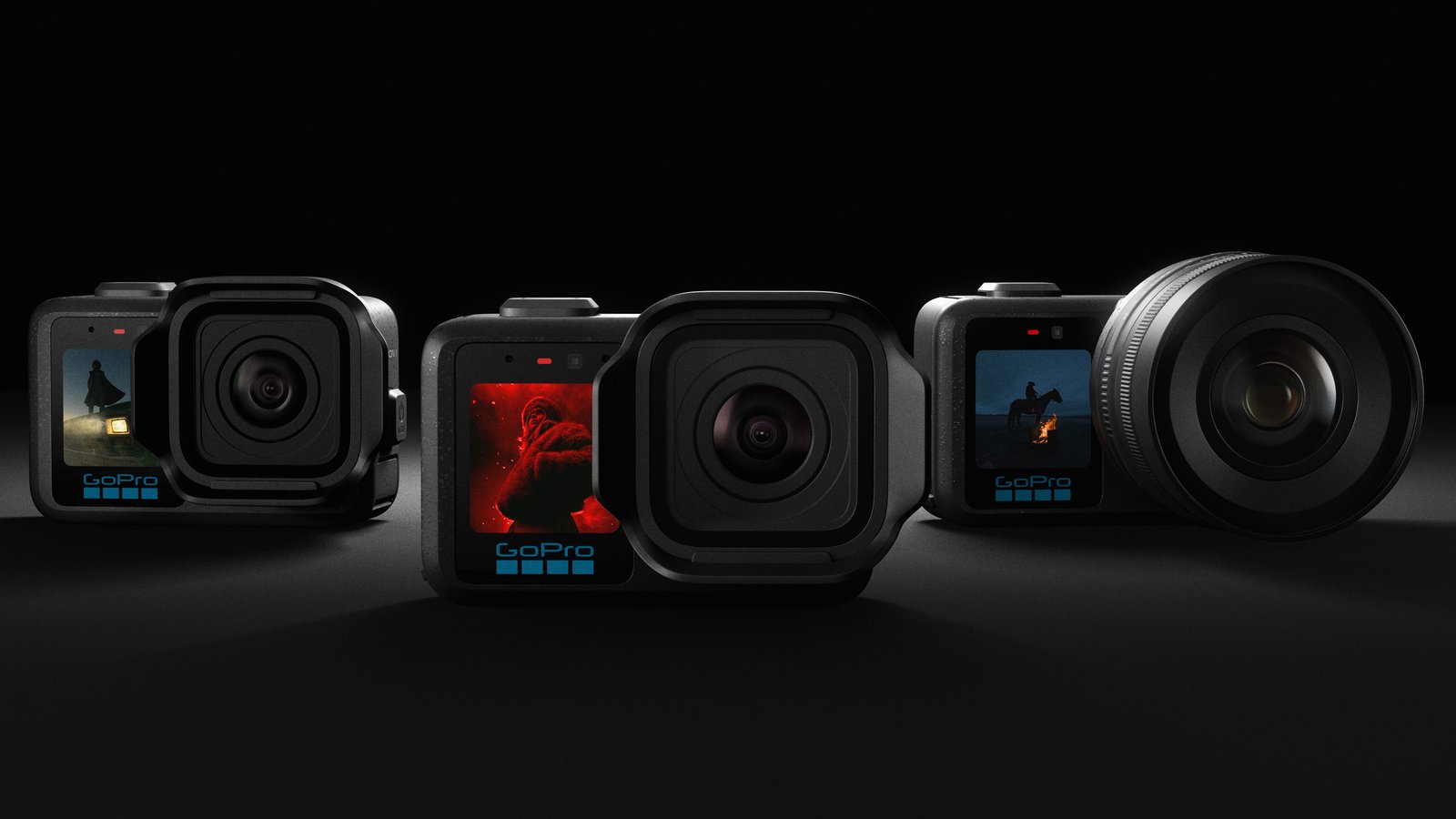
DJI's current standard-bearer is the Osmo Pocket 4P, and its spec sheet reads like a dare. The dual-lens system pairs a 1-inch wide-angle sensor with a 60mm f/1.8 telephoto offering 3x optical zoom — a genuine optical telephoto on a device that fits in a jacket pocket. It shoots 4K slow-motion at 240 frames per second, claims 17 stops of dynamic range, and sells for around 599 euros. Nothing from Canon, Sony, or Nikon competes with that combination of size, stabilization, and imaging ambition at anything close to the price.
The 4P sits at the top of a deep lineup: the standard Pocket models for vloggers, the Action series for the GoPro crowd, and now the co-branded Huawei edition extending into phone-ecosystem integration. DJI is not dabbling in cameras. It is running a full-stack imaging business with the same relentless iteration cadence it once applied to drones.
Insta360's counterweight is the Luna Ultra, the company's push into the premium end of the portable market with computational imaging and AI-driven features as its differentiators. Where DJI leans on gimbal hardware and sensor size, Insta360 leans on software — reframing, auto-tracking, and the kind of post-capture flexibility that comes from capturing more than a traditional frame. The two companies' philosophies differ, but their effect is the same: squeezing the traditional makers from the direction they least expected.
The rivalry between DJI and Insta360 has become one of the most productive competitions in consumer tech, each company's launches forcing the other to raise its game. Consumers are the winners — the pace of innovation in portable cameras right now dwarfs anything happening in the stagnant compact segment the Japanese makers left behind.
The deeper story in the IDC numbers is what the portable segment's growth says about how people actually shoot. The compact camera died because phones got good enough; the handheld gimbal camera is thriving because phones cannot do what it does. Mechanical stabilization, real optical zoom, 1-inch sensors, and purpose-built ergonomics for video — these are durable advantages that no software update can replicate, and they map exactly onto how a generation raised on video-first social platforms wants to create.
Every vlogger with a Pocket on a mini tripod, every traveler capturing buttery walking shots without a gimbal rig, every action-sports shooter who left GoPro for better stabilization — they are all votes for the proposition that dedicated cameras still have a future, just not the future the old guard planned for. The camera did not die. It shrank, stabilized, and moved to Shenzhen.
For Drone Camps readers, the strategic implications are the real story. DJI's drone business in the United States is fighting for its life under the authorization freeze — a battle this site covers regularly. But these market-share figures are a reminder that DJI is no longer a drone company that happens to make cameras. It is an imaging technology company, increasingly diversified across drones, handheld cameras, action cameras, microphones, and gimbals — and winning decisively in the categories where it is allowed to compete freely.
That diversification is DJI's insurance policy. Every euro of Pocket 4P revenue is revenue that does not depend on FCC authorizations or the outcome of docket fights. It funds the R&D, sustains the engineering teams, and keeps the company healthy enough to still be standing — and still innovating — whenever the American drone market finally reopens. For pilots who want DJI drones to have a future in the United States, the company's camera dominance is not a distraction from that fight. It is what makes winning it possible.