By Justin Davis, Drone Camps RC · October 6, 2026
Here is a deal that tells a much bigger story than its price tag. Around September 18, the two-person DJI Mic Mini wireless microphone kit dropped to $79 on Amazon — an all-time low for one of the most popular creator audio kits on the market. At the same time, DJI's own official US store had no stock to price against. Empty shelves at the manufacturer, record lows at the retailer: that contradiction is the American DJI experience in 2026, compressed into a single product listing.
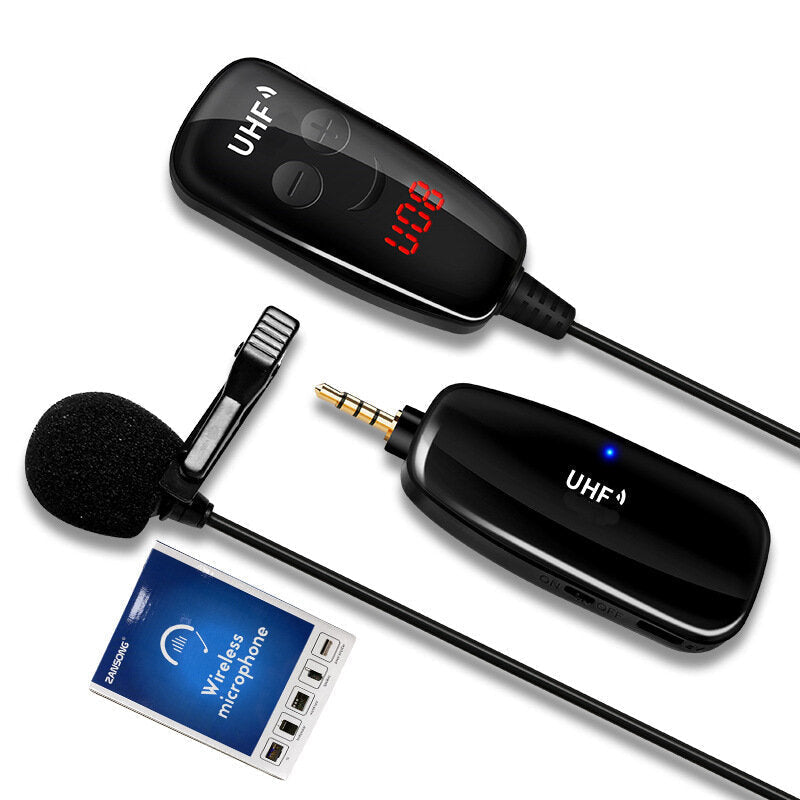
The Mic Mini has earned its popularity honestly. It is tiny — the transmitters clip to a shirt and all but disappear on camera — pairs in seconds, and delivers clean, reliable wireless audio at a price that undercuts most competitors by half or more. For YouTubers, interviewers, wedding videographers, and the entire sprawling creator economy, it became the default recommendation almost overnight. At $79 for a two-person kit, it is not just a good deal; it is the kind of price that makes you buy a backup.
DJI's barren US storefront is not a supply-chain hiccup. It is the visible edge of the authorization freeze that has defined the company's American business since foreign-made drones landed on the FCC's Covered List. Without new equipment authorizations, DJI cannot legally market new products in the United States — and while existing inventory still flows through retailers like Amazon, the company's direct channel has withered. When the manufacturer cannot sell you its own product, third-party sellers set the price, and prices do what prices do when supply is finite and demand is not.
That dynamic cuts both ways for buyers. On the one hand, deals like the $79 Mic Mini appear as retailers compete to move limited stock. On the other, there is no guarantee of what comes next: no restocks you can count on, no new generations launching on schedule, no official support channel standing behind the purchase. Buying DJI in America in 2026 means buying into uncertainty — discounted, but uncertain.
The regulatory fight behind all of this played out in public in FCC docket 26-189, and the comment numbers are almost comically lopsided: 3,770 comments filed against the restrictions versus 16 in favor. That is not a typo — sixteen. Among everyone who cared enough to write to the FCC about the future of DJI products in America, opposition to the restrictions outnumbered support by more than two hundred to one.
Those 3,770 comments came from real stakeholders: public-safety agencies that fly DJI drones because nothing else matches the capability per dollar, small businesses built around aerial services, farmers, inspectors, filmmakers, and hobbyists. The 16 in favor represent the narrow set of voices — mostly competitors and security hawks — arguing the restrictions do not go far enough. Whatever the FCC ultimately decides, the docket stands as a remarkable public record of just how deeply DJI products are embedded in the American economy, and how few people outside the debate's core proponents actually want them gone.
For shoppers weighing the $79 Mic Mini against DJI's step-up option, the math is interesting. The Mic 3 flagship sits at $183 — more than double the sale price — and the practical differences are narrower than the price gap suggests. Half a gram separates the tiers in transmitter weight, a difference no human could detect in use. The Mic 3 adds refinements that matter to working professionals, but for the vast majority of creators, the Mini at $79 delivers the core experience — tiny, reliable, great-sounding wireless audio — at a price that feels like a different product category entirely.
That value proposition is exactly why the Mic Mini became a phenomenon, and exactly why its price movements are worth watching: it is the rare DJI product where the buying decision is pure consumer logic, uncomplicated by airspace rules or authorization drama. Or it should be.
Here is the detail that turns this from a deals post into a parable. The Mic Mini has no camera. It has no GPS. It cannot fly, hover, or surveil anything. It is two tiny microphones and a receiver — about as far from an unmanned aircraft as a DJI product can get. And yet it falls under the same authorization regime as the drones, because the Covered List framework sweeps in the company's products broadly rather than distinguishing by capability.
That is the lived reality of the current rules: a $79 microphone kit for wedding videographers is collateral damage in a fight about aerial surveillance. Nobody at the FCC set out to make wireless mics harder to buy, but broadly written restrictions have broadly felt consequences. When the history of this period gets written, the Mic Mini at $79 — discounted because the manufacturer cannot sell it themselves, regulated as if it could fly — might be the single most relatable illustration of how the policy landed on real people.
Strip away the policy analysis and the question is simple: at $79, is the two-person Mic Mini worth it? Emphatically yes. It remains one of the best values in creator gear at any price, let alone this one. Just buy with open eyes — from a reputable seller, with the understanding that DJI's direct support in the US is a shadow of what it was. For a microphone, that is a manageable risk. The tragedy is that it has to be a risk at all.