By Justin Davis, Drone Camps RC · October 6, 2026
Two very different FAAs showed up this year. One is handing out approvals to police and fire departments faster than ever before. The other is coming down harder than ever on pilots who break the rules. If you fly drones in the United States — for fun, for work, or for a department — you need to understand both of them, because the gap between the welcome mat and the hammer has never been wider.
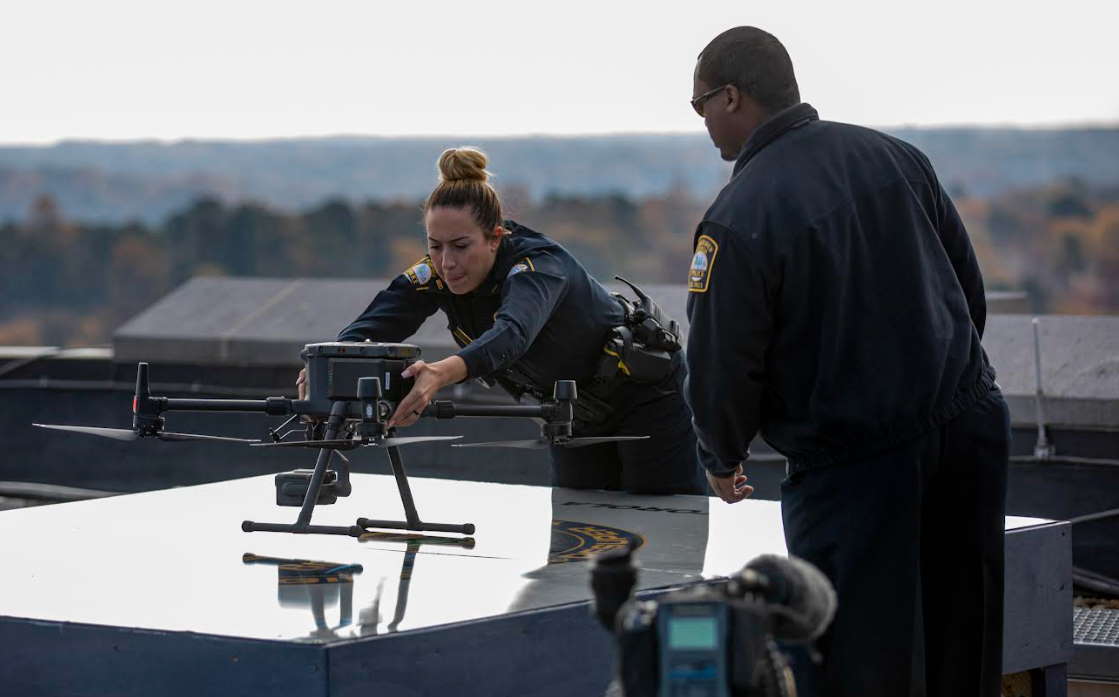
The numbers tell the story. Between April 2025 and February 2026, the FAA's expedited public-safety waiver process cleared more than 1,000 agencies. To put that in perspective, the agency issued just 976 such approvals across the entire seven years before that. A decade of paperwork compressed into ten months. Something fundamental changed in how Washington treats first-responder drones.
For years, getting a public-safety drone program off the ground meant fighting the same slow bureaucracy as everyone else. A fire chief who wanted a thermal drone for night searches filed the same kind of paperwork as a real-estate photographer — and waited just as long. The expedited process flipped that. Departments with a legitimate public-safety mission now move through a dedicated lane, and the results speak for themselves: over a thousand agencies cleared in under a year.
That matters on the ground. A police department that can launch a drone as a first responder — eyes on a scene before officers arrive — operates differently than one waiting twenty minutes for a helicopter. Fire crews mapping a wildfire's edge in real time make different calls than crews working off yesterday's satellite pass. The waiver fast lane isn't about paperwork. It's about response times, and response times save lives.
The surge also signals something bigger: the FAA has decided that public-safety drones are no longer an experiment to be carefully rationed. They're infrastructure. When an agency approves a thousand departments in ten months, it's not testing the waters anymore — it's building the pool.
But the same agency opening the throttle for first responders is tightening the screws everywhere else. The DETER program — Drone Expedited and Targeted Enforcement Response — is designed to shorten the path from a reported violation to a real penalty. In plain English: the days of flying recklessly and assuming nothing would happen are ending.
Historically, FAA drone enforcement has been slow and inconsistent. A pilot could buzz a wildfire, post the footage, and wait months — sometimes forever — for consequences. DETER changes the timeline. By streamlining how violations move from report to investigation to penalty, the agency is trying to make enforcement something pilots actually factor into their decisions, not background noise.
For the hobby community, this is the part to take personally. Most of us fly clean. But the pilot who doesn't — the one flying over the crowd, through the TFR, beyond visual line of sight over a neighborhood — is about to discover that the FAA's patience has run out. And every high-profile bust makes the hobby look worse to the regulators writing tomorrow's rules.
The context isn't theoretical. A Colorado pilot is facing federal charges over a wildfire temporary flight restriction violation — flying a drone where firefighting aircraft were operating. If you've ever wondered why TFRs exist, imagine a helicopter pilot dodging an unannounced quadcopter while trying to drop water on a fire line. Prosecutors don't bring federal charges for fun. They're making an example, and the example is aimed at everyone tempted to get the shot.
Then there's the World Cup. Federal agents seized more than 600 drones at 2026 World Cup venues. Six hundred. That's not a handful of confused tourists — that's a systematic security problem at the highest-profile sporting events on the planet, and it landed squarely in the lap of every policymaker already nervous about drones over crowds.
Each of these incidents does double duty. It justifies tougher enforcement today, and it hardens attitudes in Congress and the FAA against loosening rules tomorrow. The pilot who flew over the stadium didn't just risk a fine — they made life harder for every FPV pilot who wants reasonable access to reasonable airspace.
Step back and the pattern is clear. The FAA is drawing a bright line: legitimate, accountable drone operations get the fast lane, and everyone else gets the spotlight of enforcement. Public-safety agencies with training programs and accountable leadership sail through. Rogue operators get DETER.
There's a lesson in that for the hobby world too. The pilots and clubs that operate transparently — TRUST certification, Remote ID compliance, coordination with local authorities — are building the track record that keeps the hobby defensible. The ones treating every flight like a dare are building the case against us.
None of this is abstract. The waiver numbers prove the FAA can move fast when it wants to. DETER proves it can hit hard when it decides to. Which version of the agency you meet depends almost entirely on which side of the line you fly.
The practical takeaways are simple. First, if you fly anywhere near emergency operations, wildfires, or big events, check for TFRs every single time — the enforcement data says the FAA is watching those airspaces closely. Second, keep your TRUST certification current and your Remote ID working; compliance is your shield if anything ever gets questioned. Third, if you're part of a club, talk about this stuff openly. The culture of a flying community is set by what its members tolerate.
The drone world is splitting into two lanes, and the fast one is reserved for pilots the FAA trusts. A thousand public-safety agencies just proved that trust can be earned at scale. The rest of us should take the hint.