By Justin Davis, Drone Camps RC · October 6, 2026
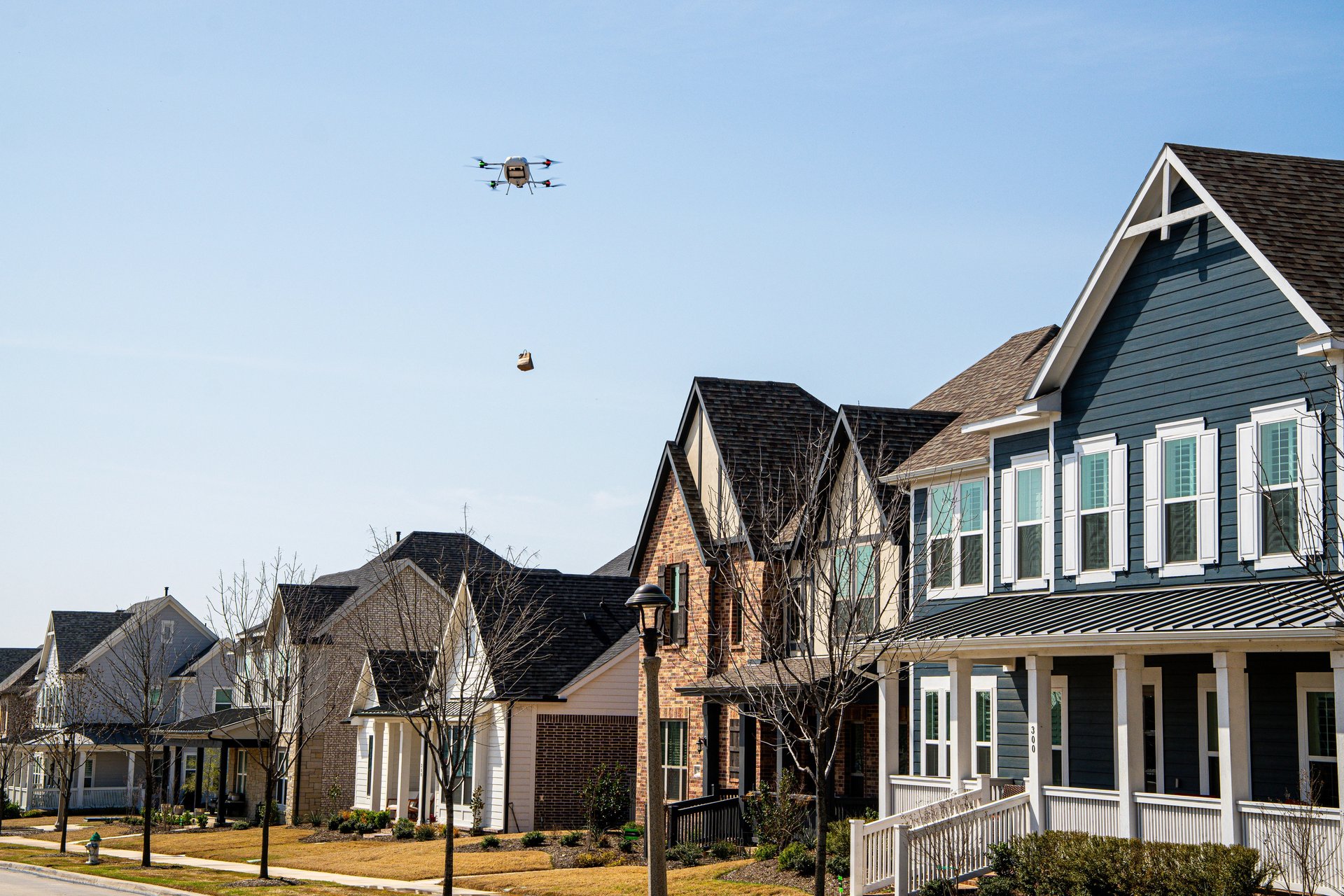
In two weeks, a small South Carolina city will decide something that could echo across the entire country: whether local zoning can put real conditions on a drone delivery hub before the concrete is poured. North Myrtle Beach has scheduled a public workshop for October 7 and a Planning Commission vote for October 20 on zoning case Z-26-22 — the Amazon drone pad.
City staff recommended postponing the decision, which tells you something about how seriously they're taking it. This isn't a rubber stamp. It's a city trying to figure out, in real time, what power it actually has over an aviation facility that the federal government has already blessed from above.
The timeline is striking. Other communities have spent a year or more wrestling with drone delivery proposals — studies, hearings, revised applications, more hearings. North Myrtle Beach is compressing that into a fortnight: workshop on the 7th, vote on the 20th.
Speed cuts both ways. Moving fast means residents get certainty sooner, and it means Amazon gets an answer instead of death by delay. But it also means less time for the careful work — the noise studies, the flight-path mapping, the conditions on hours and frequency that separate a well-managed operation from a neighborhood nuisance.
The workshop on October 7 is the key moment. That's where residents can ask the questions that shape the vote: how many flights, at what hours, over which streets, with what recourse when something goes wrong. By October 20, the commission votes. After that, the window narrows fast.
North Myrtle Beach isn't deciding in a vacuum. South Carolina Act 150 of 2026, effective this past January, reset the legal landscape — and under the prevailing accessory-use reading, the drone pad decision lands squarely with the city. In other words: this is the city's call to make.
That's a bigger deal than it sounds. For years, the drone industry has argued — sometimes successfully — that federal authority over airspace preempts local interference. Act 150 pushes back, clarifying that when it comes to the ground facility, the zoning, the land use, the city has the pen. The October 20 vote will be one of the first real-world tests of that authority.
If the commission attaches meaningful conditions — flight caps, hour limits, noise standards — and those conditions stick, every city in South Carolina (and plenty watching from other states) gets a template. If the vote goes through clean, the industry gets a different template: move fast, keep conditions light, dare someone to stop you.
Resident Jolene Puffer put the stakes better than any lawyer could when she warned the commission: "Once we set a precedent, something happens forever." She's right, and it's worth sitting with that sentence.
Zoning decisions are forever in a way that most policy isn't. A pad approved today with loose conditions becomes the baseline for the next pad, and the one after that. Future commissions will point back to Z-26-22 and say: this is what we allowed. Precedent is the quietest, most powerful force in land use — it compounds.
That's why the workshop matters more than the vote. Votes ratify; workshops shape. The residents who show up on October 7 with specific, reasonable asks — not just "no drones" but "here are the conditions that would make this work" — are the ones who'll actually influence what "forever" looks like.
Here's the detail that should make everyone pay attention. The hub as approved would handle around 150 orders a day. But the FAA authorization behind it covers up to 1,000. And nothing in the current approval addresses flight counts or operating hours.
Read that again. The number residents will be told — 150 — is less than one-sixth of what the federal paperwork allows. If the operation succeeds and scales, there's no local mechanism in the current approval to say "not that many" or "not at 6 a.m." The ceiling is 1,000, and the floor for discussion is wherever the city sets it on October 20.
This is the single most important thing for any community to understand about drone delivery approvals: the opening number is never the final number. Approvals are written for the operation Amazon wants eventually, not the one it launches with. If you want limits, they have to be written into the local approval now — because later, "we already approved this" is the whole argument.
So here we are: a workshop, a vote, a new state law, a resident's warning about forever, and a 150-versus-1,000 gap that nobody has closed. North Myrtle Beach didn't ask to be the test case, but test cases rarely volunteer.
Whatever happens on October 20, the rest of the country should watch closely. This is what local control over drone delivery actually looks like in practice — not in theory, not in a law review article, but in a planning commission room on a Tuesday night. The drone age isn't being decided in Washington. It's being decided in places like North Myrtle Beach, two weeks at a time.