By Justin Davis, Drone Camps RC · October 6, 2026
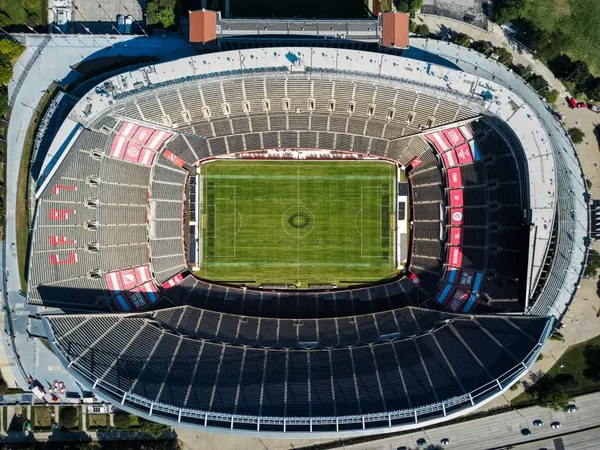
For ten years, it has been one of the strangest gaps in American drone law: Congress ordered the FAA to create a process for fixed sites to restrict drones overhead, and the FAA simply never did it. That changed in May 2026, when the agency finally proposed the Section 2209 rule — a framework that would let stadiums, prisons, power plants, and other fixed facilities apply for Unmanned Aircraft Flight Restrictions in the sky above them.
If finalized, the rule would create an entirely new category of American no-fly zone. Not the temporary restrictions that already surround stadiums on game days or wildfires in progress, but permanent, standing flight restrictions over private facilities — granted one application at a time, accumulating year after year into a patchwork pilots will have to navigate.
Section 2209 of the FAA Extension, Safety, and Security Act of 2016 directed the FAA to establish a process for "eligible" fixed-site facilities to seek UAS-specific flight restrictions. Congress gave the agency a clear instruction. The agency took a decade to act on it.
The delay is its own story — a mix of competing priorities, leadership turnover, and the sheer difficulty of designing a fair application process. But the May 2026 proposal is finally here, and the comment period gave the industry its first look at how the FAA thinks this should work.
Under the proposal, an eligible facility would apply to the FAA for an Unmanned Aircraft Flight Restriction — a UAFR — covering the airspace above and around its site. No UAFRs exist yet; the rule creates the process, and each facility would have to make its own case, one by one.
The details matter enormously and remain in flux: how large can a restriction be, how high does it extend, what justifications qualify, and — critically — who gets exceptions. A prison worried about contraband drops has a very different case from a stadium worried about game-day disruptions, and the FAA will have to draw lines between them.
The demand is real. Prisons face a constant battle against drones delivering contraband over walls. Power plants and other critical infrastructure sites worry about surveillance and sabotage. Stadiums already get temporary restrictions during events and want something more durable. For facility operators, the current system — call the FAA, hope for a temporary restriction, repeat — is exhausting and unreliable.
From their perspective, Section 2209 is overdue common sense: a front door instead of a fire escape. The question has never been whether some facilities deserve protection from unwanted drones. It is how much sky the rest of us lose in the process.
Not everyone is cheering. Press organizations told the FAA during the comment period that the draft ignores newsgathering needs — and they have a point with constitutional weight behind it. Some of the most important drone journalism of the last decade has been flown over exactly the kinds of facilities that would seek restrictions: prisons, industrial sites, and disaster scenes.
A rule that lets a private facility close the sky above itself, with no meaningful accommodation for journalists documenting what happens inside, raises First Amendment questions the draft does not adequately answer. News organizations fly drones because some stories cannot be told from the ground. A patchwork of permanent restrictions risks shrinking the newsgathering airspace story by story, prison by prison.
The deepest concern for everyday pilots is cumulative. One UAFR over one prison is a minor inconvenience. Ten thousand UAFRs — over every prison, power plant, stadium, refinery, and data center whose lawyers file the paperwork — is a fundamentally smaller sky. Each restriction is individually reasonable; together, they redraw the map.
Hobbyist pilots already navigate a layered airspace: controlled airspace around airports, temporary restrictions, national park bans, local ordinances. Section 2209 would add a new layer that grows unpredictably, site by site, with no central map at the outset. The burden of knowing where you can fly keeps shifting onto the pilot.
In the meantime, the practical advice is unchanged but more urgent: check your airspace before every flight, and use tools that surface UAS facility maps and notices to air missions. The airspace is only getting more complicated, and the pilots who stay out of trouble will be the ones who treat preflight airspace checks as non-negotiable — as routine as checking battery voltage.
The rule is proposed, not final. That means the shape of the finished regulation is still being negotiated — and pilot voices still count. The press objections show that organized pushback can surface issues the FAA overlooked. Organizations representing recreational and commercial pilots would be wise to press for clear exception processes, reasonable size limits, and a public, machine-readable registry of every granted UAFR.
Because once the first restrictions are granted, the patchwork starts growing. And unlike a temporary game-day restriction that lifts at midnight, these are designed to stay.