By Justin Davis, Drone Camps RC · October 6, 2026
Captain Kyle Nordfors does not lobby for a living. He coordinates the drone program for Weber County Search and Rescue in Utah — a volunteer team that flies into the mountains when hikers go missing and snowboarders do not come home. On October 2, 2026, he took his argument to Washington the only way a volunteer rescue pilot can: he published an op-ed in The Hill, and he told the country plainly that the FCC's proposed drone ban will cost lives.
The numbers behind his warning are stark. His team's drones have helped save an estimated 25 to 30 lives. The average search time has fallen from four and a half hours to under one hour since drones joined the toolkit. Those are not projections or promises. They are the measured results of years of real missions in real mountains.
The Federal Communications Commission is weighing a proposal in PS Docket 26-189 that would bar the import and sale of foreign-made "military-grade" drones in the United States. The definition sweeps broadly — and it captures exactly the kind of aircraft Nordfors flies: thermal-camera and LiDAR-equipped drones built for finding people in the dark, in the snow, and in terrain where every minute matters.
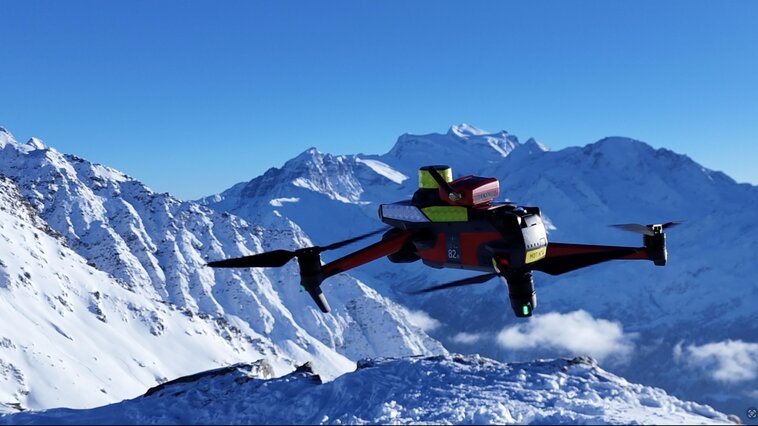
His team's workhorse is the DJI Matrice 30T, a thermal-equipped aircraft that has become standard equipment for search and rescue teams across the country. Two years ago, that aircraft found a snowboarder in the dark — a mission that ends very differently without a thermal camera overhead. Under the FCC's proposal, replacing that capability gets dramatically harder.
Nordfors is not speaking from brand loyalty. He has flown American-made alternatives, and his verdict is blunt: none of them match what his fleet can do today. The domestic options exist, but they lag on the combination of thermal imaging quality, flight time, reliability, and cost that volunteer rescue teams depend on.
And then there is the price. Replacements for his team's aircraft cost three to eight times more than the drones they fly now. Weber County Search and Rescue is a volunteer organization. It does not have a procurement budget that absorbs a fivefold cost increase. For teams like his across the country, the choice the FCC is offering is not between a Chinese drone and an American one — it is between a drone and no drone at all.
Nordfors is far from alone. When the FCC's public comment period closed on September 2, the tally was lopsided beyond anything Washington usually sees: Pilot Institute's count found 3,770 filings against the proposal and 16 in favor. Among the opponents were 298 public safety agencies — fire departments, sheriff's offices, and rescue teams who fly these aircraft for a living.
That ratio tells its own story. The people who actually operate drones in American skies — the pilots, the first responders, the agencies — overwhelmingly told the FCC not to do this. The 16 supporters of the ban, whatever their arguments, do not fly search patterns at midnight in the Wasatch Range.
Regulatory battles in Washington are usually fought in the language of supply chains, threat assessments, and equipment authorizations. Nordfors dragged the debate back to ground level: a snowboarder in the dark, a thermal camera overhead, and the difference between a one-hour search and a four-and-a-half-hour one.
That is the human face of the FCC fight. Every restriction on capable aircraft ripples outward to the volunteer teams, the sheriff's offices, and the fire districts that bought the best tool they could afford and learned to save lives with it. Policy made in Washington lands in the mountains of Utah — and the people it lands on are the ones still waiting to be found.
There is a funding dimension that rarely makes it into Washington debates. Volunteer search and rescue teams operate on donations and small grants; a single Matrice 30T-class aircraft already represents a major capital expense. Multiply that cost by three to eight, as Nordfors warns, and many teams simply will not replace aging aircraft at all. The ban would not just swap one brand for another — for the thinnest-funded teams, it would quietly end their drone programs.
The comment period is closed, and the FCC is now deliberating. The commission could finalize the proposal as written, narrow it, or walk it back entirely. The 3,770-to-16 comment ratio and the public safety outcry give the agency every reason to think twice — but nothing in Washington is certain until the order publishes.
For the pilots watching from the hobby world, Nordfors' op-ed is a reminder of what is actually at stake in the acronym soup of dockets and orders. Behind every equipment authorization is a tool someone uses. And sometimes that tool is the difference between a rescue and a recovery.